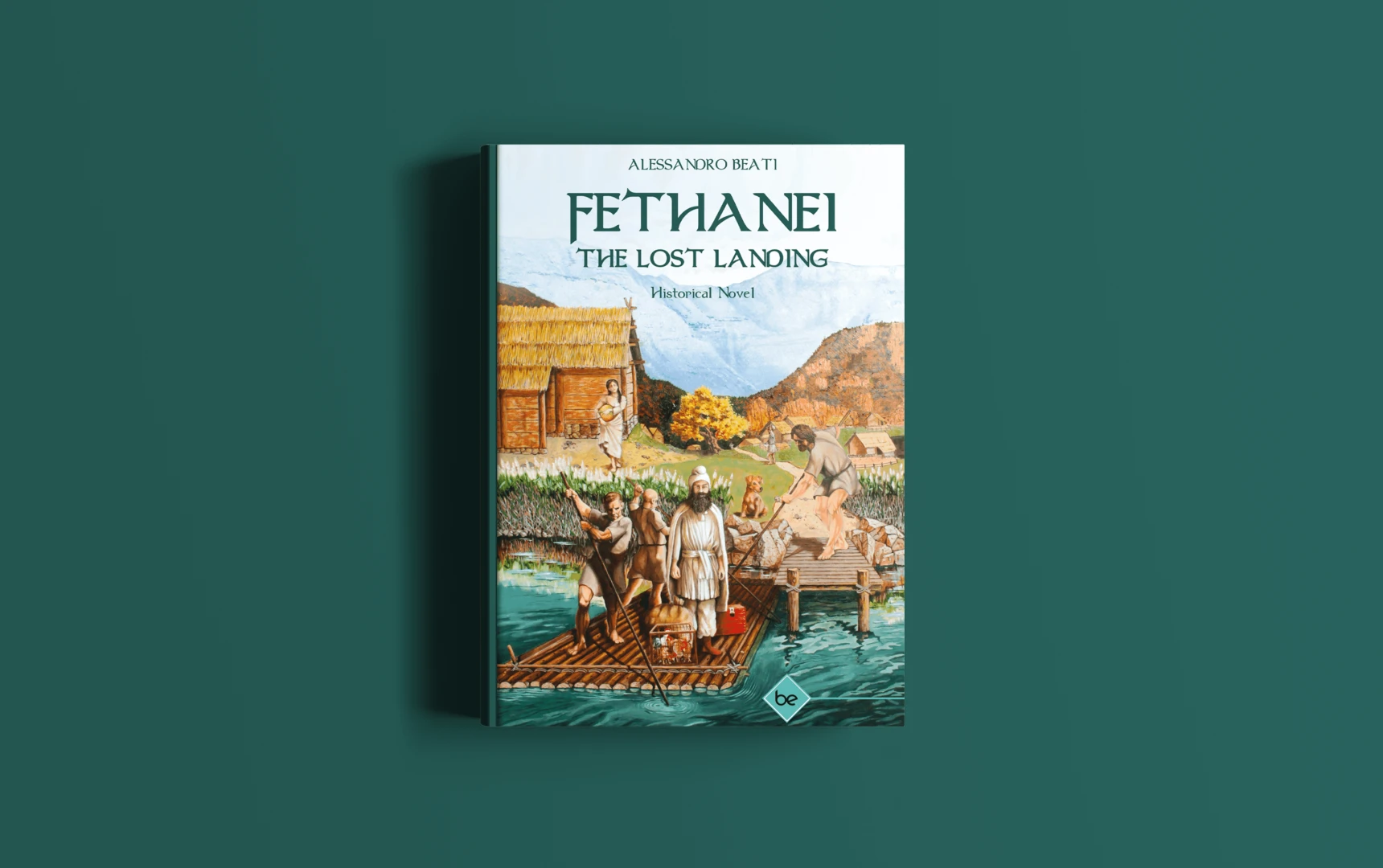
A historical novel discovering a forgotten history!
- Immerse yourself in these places and discover the history of Fethanei
- Fethanei: a story that deserves to be told and read
The noble goal behind the historical novel
- Fethanei: The Lost Landing” is the result of a series of catalyzing events. The author created it to fulfill his desire and challenge to write his first book, but also with a specific purpose:
This narrative aims to bring back to memory the history of that enchanted and mysterious place, to try to restore to it a respect and dignity that it would have deserved long ago
The book’s preview was read by some experts in the field and devotees of the subject:

Prof. Rosetta Infelise Fronza / philosopher, professor and writer
Alessandro Beati offers us a “historical novel” leading the readers on recognizable paths of our territory: the Alto-Adige – Südtirol, which he defines as an “extraordinary middle land” characterized by the encounter between the native inhabitants and those who lingered there albeit for short periods.An encounter between different people and cultures since ancient times, a lively and still present relationship between the Mediterranean and Central European worlds.The novel takes place in a small village and, at the end of every chapter, there is a section called “Excursus” full of curiosities and historical facts, the result of deep scholarly research conducted by Alessandro Beati, thus not sparing those who are more attentive to historical philological documentation.“It tells the story of a small Rhaetian village, its landing place, and an emporium located at the foot of the Alps, forgotten for so many centuries that, for some people, they never existed. Nevertheless, at that time, this landing was crucial because from there, sailing with boats and rafts on the Adige River – Athesis for the Romans, one could reach the Adriatic sea”.That landing place is now lost, but thanks to Alessandro Beati’s account, we can now glance back, looking at the complex interweaving of past and present.

Mary Jamil / archeologist, historian and researcher
“Fethanei, the Lost Landing” is a splendid and unforgettable novel, where the narrative flows with a lively and fresh force, just like the Adige River. With literary and historical dexterity, the author, in his first book, has managed to revive an entire culture, brilliantly encapsulated in the framework of a Rhaetian village forgotten for centuries.But not only this. Alessandro Beati, during his research for the novel, clearly and deeply understood that the modest Rhaetic people, classified by the Romans as “barbarians”, had ethical-spiritual values and ideals of the highest level: values that our modern society has forgotten and abandoned.The main merit of the novel “Fethanei: the Lost Landing” lies, therefore, in its mission as a guide and as clear and convincing proof of the possibility of living together in peace and harmony.

Prof. Raffaella de Rosa / President of the Bolzano section of the Dante Alighieri society
A historical novel set in our region, which takes us back in time and makes us live in the era of the Raeti and the arrival of the Romans. Interesting insights at the end of each chapter which can also be used on an educational level, an in-depth study carried out by the author in great detail.

Ingrid Postingel Raffeiner / retired teacher, Naturns (BZ)
I really enjoyed reading the book! First of all for the story itself, because I was curious to find out from chapter to chapter what would happen to the various characters. Then, with no less pleasure, the excursus! Here, a completely unknown world opened up to me and I was able to fill in some gaps in my knowledge! A big compliment to you, dear Alessandro, for your first novel! And I look forward to reading the next book!

Paolo Scarabello / retired and enthusiastic reader, Laives (BZ)
In order to understand the present and the future, it is imperative to turn to the past and thus to History, which has unfortunately been rather neglected lately by virtue of an Eternal Present. Therefore, historical novels such as 'Fethanei, the Lost Landing' are welcome, as they are a good viaticum for approaching history and then delving into it through the various dedicated essays. However, this historical novel demonstrates an accurate reconstruction of the local area of the time, dating back to the 1st century, through the atmospheres, customs, social conditions and mentality of the main characters, and this, thanks also to accurate annotations transcribed at the end of each chapter. So half essay and half narrative, fruit of the imagination or perhaps of a deja vu of a writer such as Alessandro Beati, who did a little history of his own in Vadena, as mayor for fifteen years, and perhaps, who knows, perhaps in a different guise, even in the time of the Rhaetians. As the late Friedrich Nietzsche would say: 'the Eternal Return'. Hence no longer "Fethanei - the lost landing place" but finally "the found landing place" for Alessandro, for Vadena and also for us, incurable dreamers, of Time Machines in constant search of Lost Landings. Ad maiora semper!

Marco Cortese / Journalist
Finished reading it today, all in one go, as it deserves. A very well written and even better "constructed" book. The novel has a beautiful plot, with a surprising ending that I would like to "reveal", but I won't do so not to spoil the surprise.
What I found even more beautiful and valuable are the "excursus": the historical reconstructions are artfully inserted between chapters. You can tell that they are the result of extensive 360-degree research work on a wide variety of topics. Small abstracts that give explanations not only on the history of our region, but also on customs, traditions, astronomy, military tactics, craftsmanship techniques, up to and including more distant aspects (which I do not anticipate precisely so as not to spoil the surprise effect of the book's ending).
In some ways, Vadena today plays a somewhat defiladed and secondary role compared to other neighboring villages in the Bassa Atesina. Thanks to this book - and especially thanks to its author - I believe that Vadena-Fethanei has regained that primary role it has had over the centuries. Therefore, in my opinion this book can be seen as the last, most valuable gift (at least for now...) that former mayor Beati has given to the village he administered for 15 years.
Congratulations Alessandro, you really did an excellent job! And at this point, I look forward to your next book!

Massimo Minniti / Archaeologist
Being the archaeologist that I am, I read it and found it very nice! Congratulations!I would be very happy to have you at the presentation of my book "Rings of Italy", a book about the most important dates in our country!

Katia Concone /
Just finished. A beautiful historical story and very interesting insights at the end of each chapter. I read it for free on the Kindle, but I am definitely going to buy it in the paper version, because it deserves a place in my library. Many thanks to Alessandro Beati for this book.
- Giving voice to a forgotten place, keeping in mind the importance of an accurate historic reconstruction
The history and research behind Fethanei
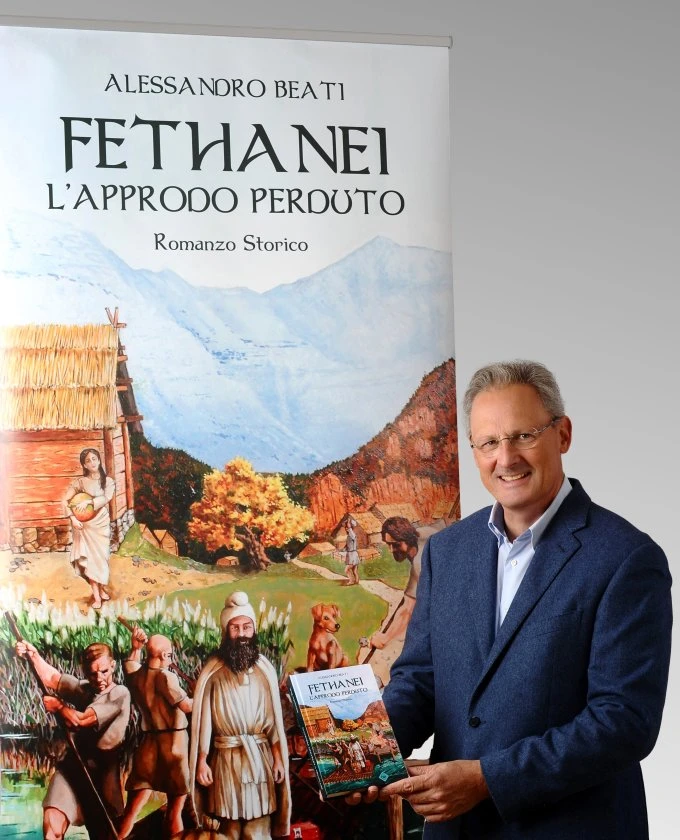
Fethanei - The Lost Landing is available not only on Amazon but also in some bookstores and newsstands in Bolzano:
Bolzano
Nuova Libreria Cappelli in Corso della Libertà, 2
Athesia in Via Portici, 41
Europa Books in C.so Italia, 6
Negozio Pro Natura in Via Penegal, 1